Sunday, December 10, 2006

The Other side of the Coin

My last day in Cape Town.

I was having a debate on what to do on my last day. The debate was between doing something adventurous that I had had my eye since I first booked my trip – SHARK CAGE DIVING. Yes, I wanted to be submerged in a cage with scuba equipment and watch sharks swim by. I thought it would have been fun The other option that was of interest to me was to take a tour through the townships. So, I opted for the multicultural side of Cape Town and did the Township Tour, and I am so glad I did.

As some background, South Africa went through a very segregated time in their history. Blacks and Whites were segregated and it was a very rough time for South Africans. The principle of the “Apartheid” was that there were two separate dimensions with separate rights. Blacks and coloured people had their rights taken away, while Whites retained theirs. Civil disobedience and protests were common. Black people had to carry passes to enter into “White areas.”

District 6 was a community within Cape Town. Named in 1867, it was the 6th district in Cape Town. It was originally a mixed community of free slaves, merchants, artisans, labourers and immigrants and it had a very tolerant and bohemian character. In 1966, during the Apartheid, District 6 was declared a white area and by 1982, some 60,000 people were forced from their homes in District 6 and moved to the empty area outside of Cape Town known as the Cape Flats.

These individuals that were displaced were forced to live in communities that became known as Townships during the apartheid. Several of the townships have evolved from what were labour camps, where male only-hostels were established to meet the needs of the nearby city. If a man lost his job or grew too old or got ill, he lost his right to live in the township and was required to return to his designated tribal homeland.

Today, in spite of the end of the apartheid, people continue to live in these townships mostly for economic reasons, but for social reason as well. Over the years, extensive communities of families and friends have evolved, many of whom have lived together for 40-50 years, and leaving would be a giant change for them. Basic services, such as electricity and water, just became a priority to the new government in 1994. Even 4 proper standing walls and a roof are rare commodity along with proper sanitary conditions,running water and electricity in some of the townships.

With my guide, we were able to visit the District 6 museum, which gave a very insightful look into the lives of the people who lived in District 6 but were forced to move. The museum began in 1994 when the apartheid was over and displays pictures of the area before and after the forced removal along with writings and memories from former residents of the district. On the floor of the museum was a giant street map of the district. During the opening of the museum, former residents were invited to come to the museum and mark on the floor map where they used to live. Many of them also left messages behind.

After the museum, we visited 2 Townships, Langa and Kayelitsha. Langa is the oldest Township dating from 1927. Slowly, it is being transformed into a modern suberb, complete with schools, medical clinics and sports facilities, but it still appears that they have a long way to go. Living in cramped corridors means that neighbours eat together, socialize together and help each other in times of need.

In Langa, our first stop was too a lady’s house who cooked sheep’s head and sells them. They are quite popular among the locals once the hair is burned and cut off. The brain is a delicacy (picture to the right). We also visited a local tavern where locals sit and drink (some of them all day long to escape). They drink homemade beer from giant tin cans. Everyone drinks out of the same can. To drink all day long, it cost about 1 US Dollar. Every time we stopped our vehicle, we were immediately surrounding by children. They’re smart..they know tourists means treats. But, god forbid you give a child anything. You give one child a piece of candy, you must give all of them candy.

One of the most disheartening things is that there is no running water at this township. There are water taps throughout the township that they must carry their laundry too. I also saw young children going to the bathroom outside in the grass/dirt next to the sidewalk. One of the schools in the township is held in a giant container like the back of a 18-wheeler truck.

Kayelitsha is the largest township in South Africa. It is 11 square miles and houses some 1 million people. As you can see, the shacks in which people live stretch for miles. Our first stop was to ‘Golden’s Workshop’. Golden makes flowers from cut-up tin cans. We then stopped at a lady’s house who had opened up a soup kitchen for children. With her creativity and ingenuity, she has more than 60 women in the township helping her.

I was worried that this tour would be putting these people on display, but it wasn't like that at all. I can’t call my trip to the townships a tour. It was an Experience. I knew that poverty existed in Africa, but until you see it first hand, I don't think anyone can ever fully grasp the conditions in which one lives. The disease and illness that comes from living in situtations such as these can be overwhelming. AIDS is prevelant in more than 30% of the citizens of these townships which leads to continued high numbers of unemployment. Crime is high because. Education is poor. This Experience was one that was eye opening and made me realize that 'bad' situtations that I may find myself in some day can' t be called bad. But, at the same time, I never saw a frown or sad face among those that we visited with. Maybe bored..maybe tired. But it's their home

Later in the afternoon, I was able to get a last minute reservations to Robben Island, the equivalent of Alcatrez. The maximum security prison where Nelson Mandela spent 18 years of his 27-year imprisonment (these are pictures of his very small cell with no bed and a red can for a toilet). With a spectacular view of Table Mountain and the Cape Town Waterfront, this fortress island has held many prisoners and others who were outcasted from society due to illness, etc. All tours of the island are led by former inmates of the prison, which really gives a prison tour a personal feel.

I was sad to end my stay in Cape Town. I really enjoyed it and I know there is so much more of South Africa that I want to see and do (Shark Cage Diving). I’m looking forward to my next vacation down there.

Labels:

The text and photos of all postings on this blog remain the copyright of Betsy Liebsch, unless otherwise stated. Under no circumstances should the photos or text be used without the express written permission of Betsy Liebsch. If you wish to use or publish photos or text from this article, please contact me.

Friday, November 10, 2006

Looking through God's Window

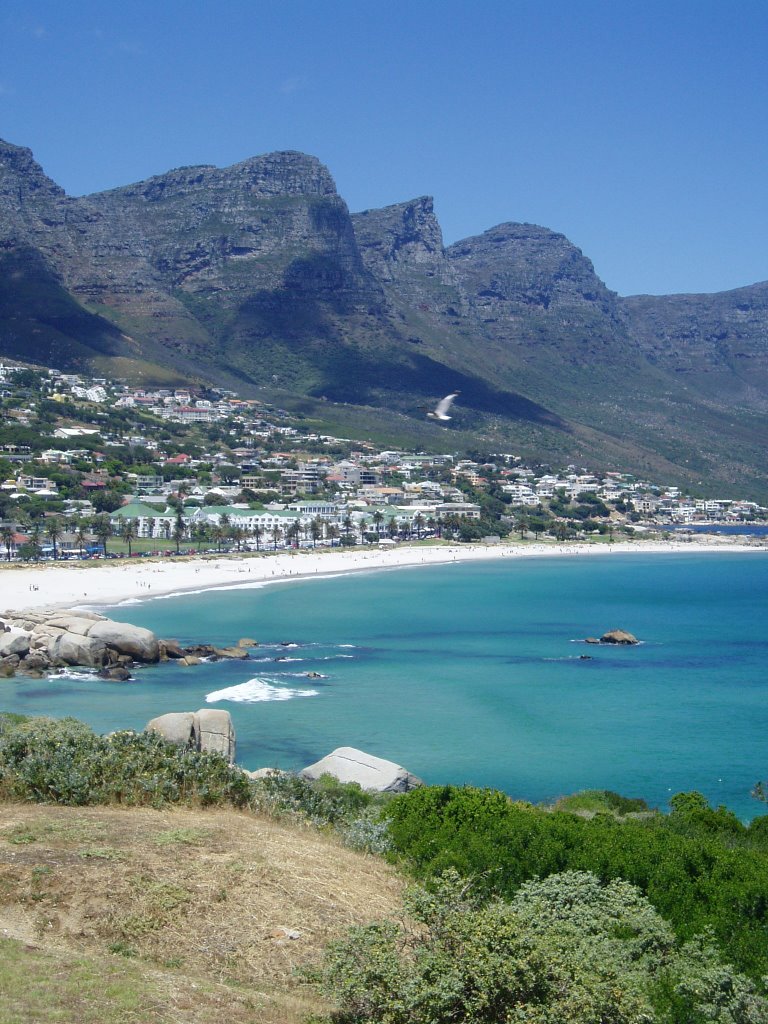
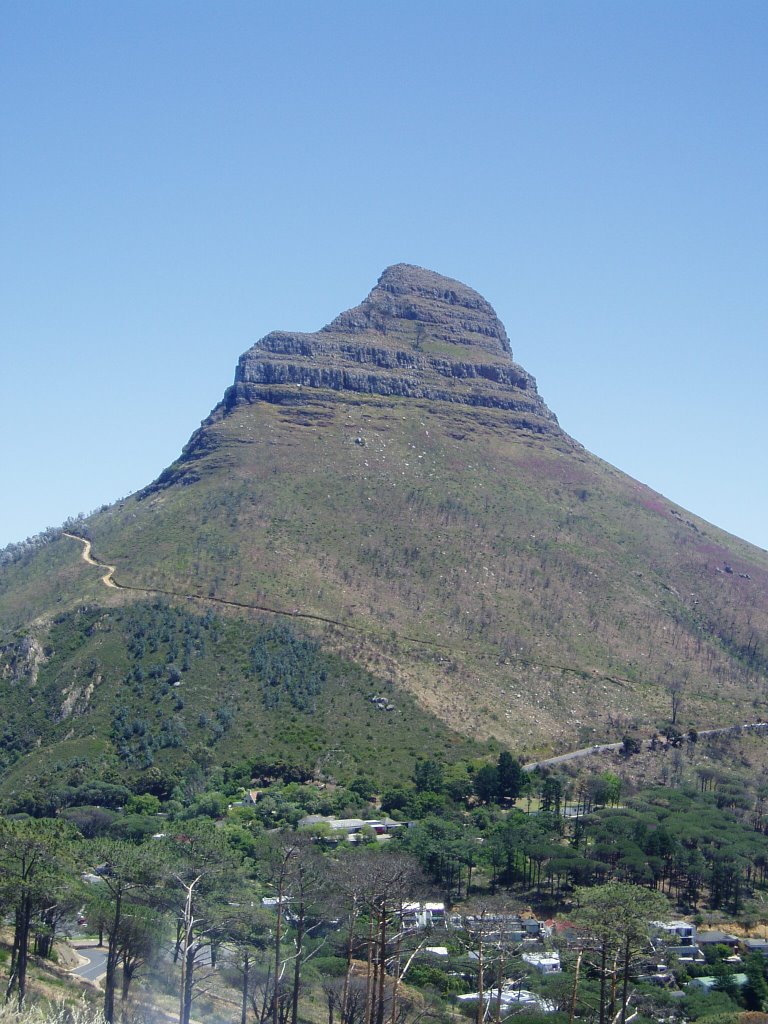
To end my travels with Kate, we decided to go for a hike on her last day in Cape Town. We hiked Table Mountain . We started our hike in Constantia, a little area south of our Guest House and recommended by the owners. We hiked along Constantia Nek, up the very steep steps of Nursery Ravine, around the mountain reservoirs on top of Table Mountain and then back down one of the 12 Apostles (the ridges that stick out of the mountain are called the 12 Apostles) on the other side into Camps Bay.

It’s funny….there is not much to say about a hike. But standing on top of the mountin, you could see for miles and miles. It was kind of like looking out of God's window. It wasn't what is officially titled "God's Window"...but it was beautiful enough to be so. The blanket of water stretched forever. The mountain range stood tall. As I stood up on top of the mountain looking out over the Atlantic Ocean, I suddenly hit me that I was standing in a place farther south than I have ever been before.

The hike was long..it was hard..but the way down was absolutely beautiful (as you can see). We saw lizards...We saw snakes. We walked on pavement...We walked on dirt...We walked on gravel...We climbed rocks....We climbed steps. We walked on Sand...When on top, the clouds rolled in and we were literally walking on a cloud.

When we got down to the bottom, Kate and I laid on the beach for a little while. At least we tried to. It was so windy that as we laid in our swimsuits and the towels we bought at the grocery store, the sand pelted us like an exfoliater which forced us to splurge for the beach chairs being rented by the locals. Kate and I found ourselves tempted to go into the water, but the touch of the water to my toes, made goosebumps appear on my arms and legs. Then out of nowhere, Kate dives in head first. She was a brave soul….not me..no way. Too frigid.

We took a taxi back to town and did a bit of shopping and then headed back to our guest house so that Kate could clean up before she needed to go to the airport.

Kate was a wonderful travel partner and I could not have asked for better company during my stay in Cape Town. Thanks Kate!

Labels:

The text and photos of all postings on this blog remain the copyright of Betsy Liebsch, unless otherwise stated. Under no circumstances should the photos or text be used without the express written permission of Betsy Liebsch. If you wish to use or publish photos or text from this article, please contact me.

Thursday, November 09, 2006

Home of the Big 5

Thursday, 9 November

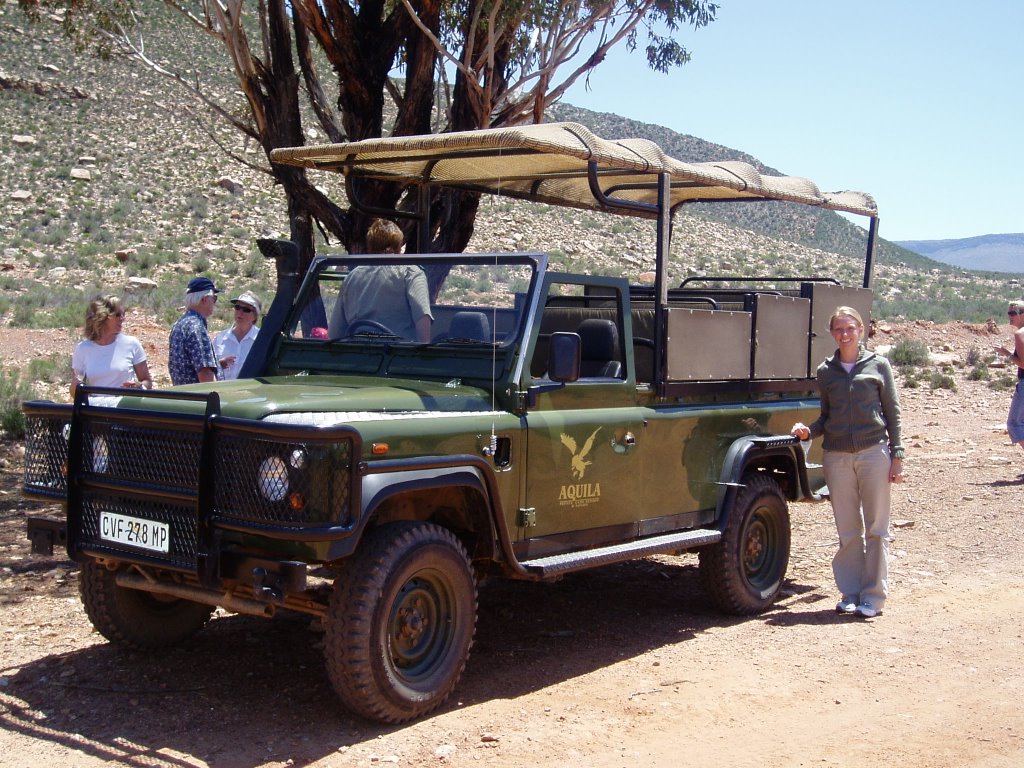
Although not really Safari country, Kate & I felt compelled to go on a Safari while in South Africa. Not sure what to expect, our biggest concern was that our Safari would be a glorified zoo for the Big 5.

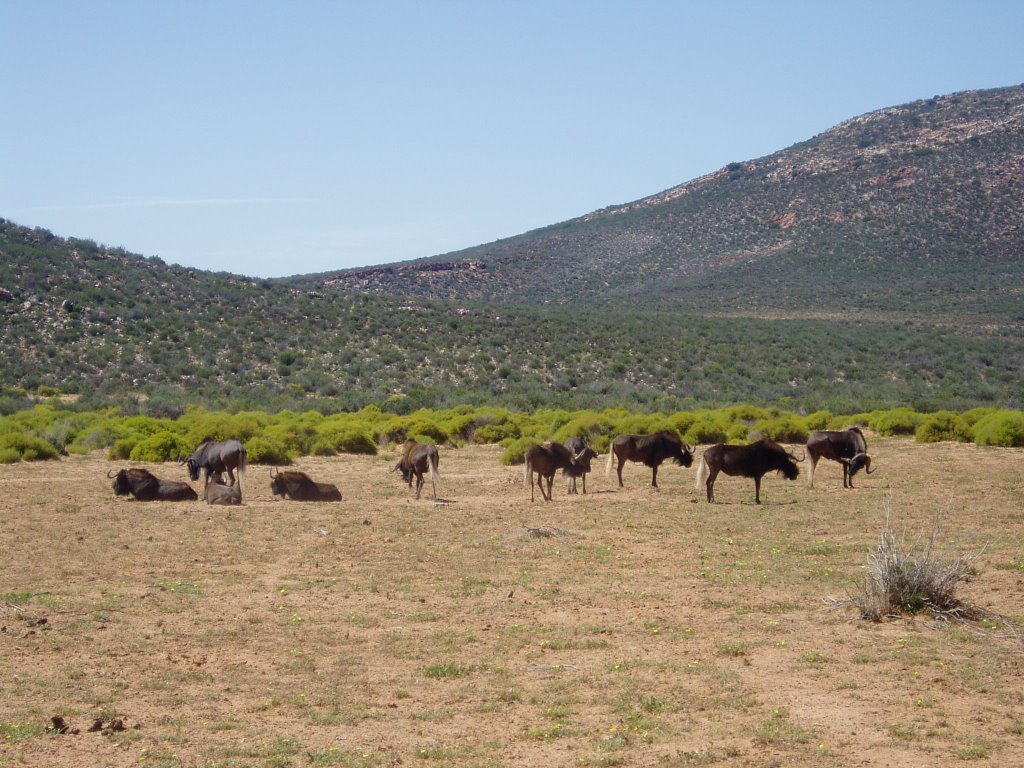
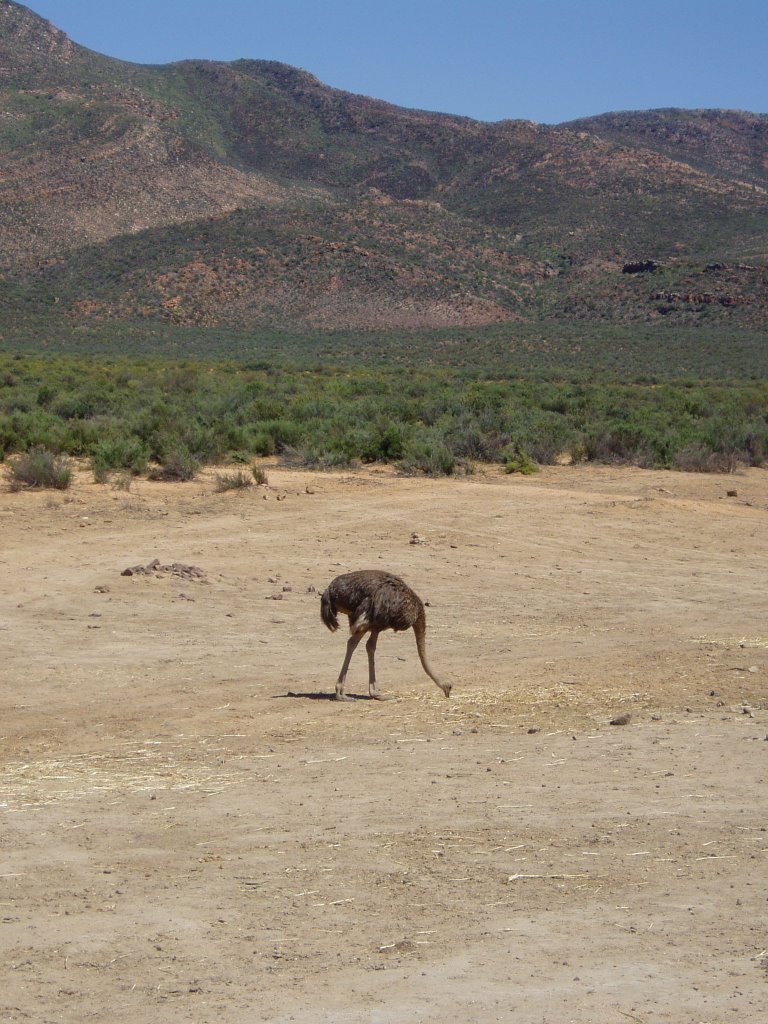
We were pleasantly surprised about our experience. I think we were both hoping to see more animals and see them a little closer, but our trusty Game Ranger was very knowledgeable about the animals and the area. The Aquila Game Reserve had only been open about 5 years and was still rather young. All of the animals had been brought to the game reserve to help protect them from being killed or dying, but the habitat in which they were roaming was as similar as to what they would live in if the animals were in Botswana or Zambia or their original habitat. We saw all sorts of animals: Elephants, Springbok, Wildebees, Rhinos, Ostrich, Zebra, and Lions.


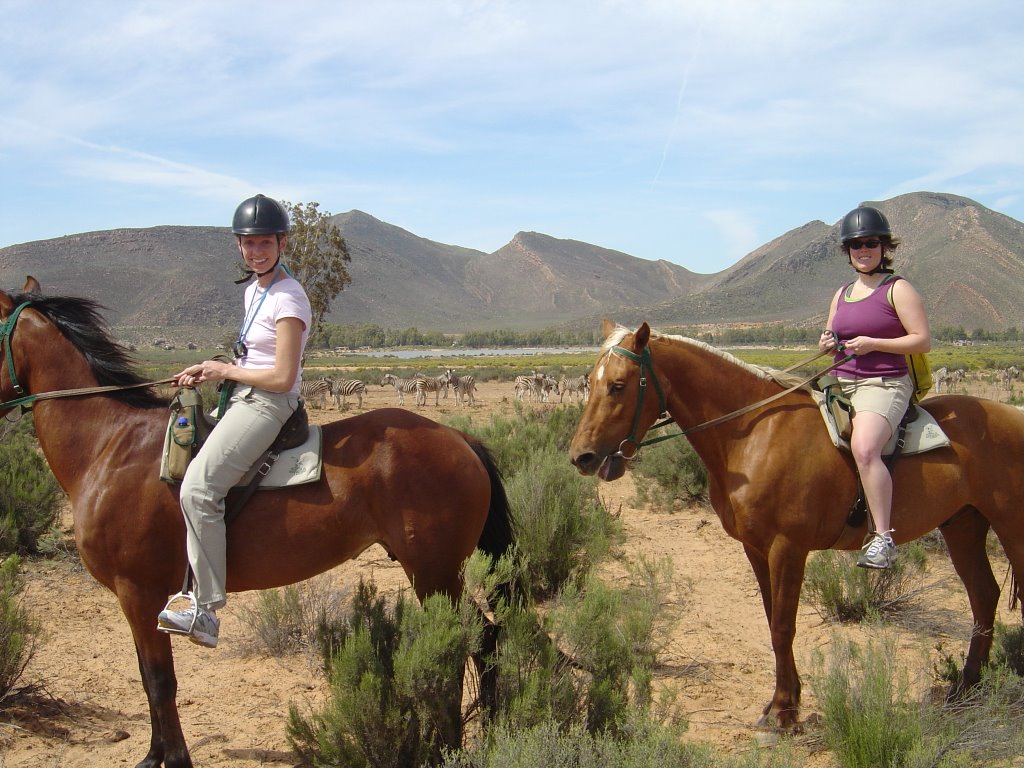
My favorite part of my first Safari (and hopefully not my last) experience was the horse-back ride Kate and I did in the afternoon. Our trusty leader, Andre, guided us on horseback in search of some animals that we did not get the opportunity to see in the morning. The Giraffe being one. At the beginning of the horse ride as we were riding through the dusty bushes, we stopped. Andre asked Kate & I to look around to see if we saw anything. At a short distance, hiding in the bushes, we saw the horns and the beedy eyes of a buffalo. Yes, a Buffalo. It was great. The horse back ride really allowed us to get much closer to the “wild animals”. We rode around the buffalo, but he watched us every step of the way.

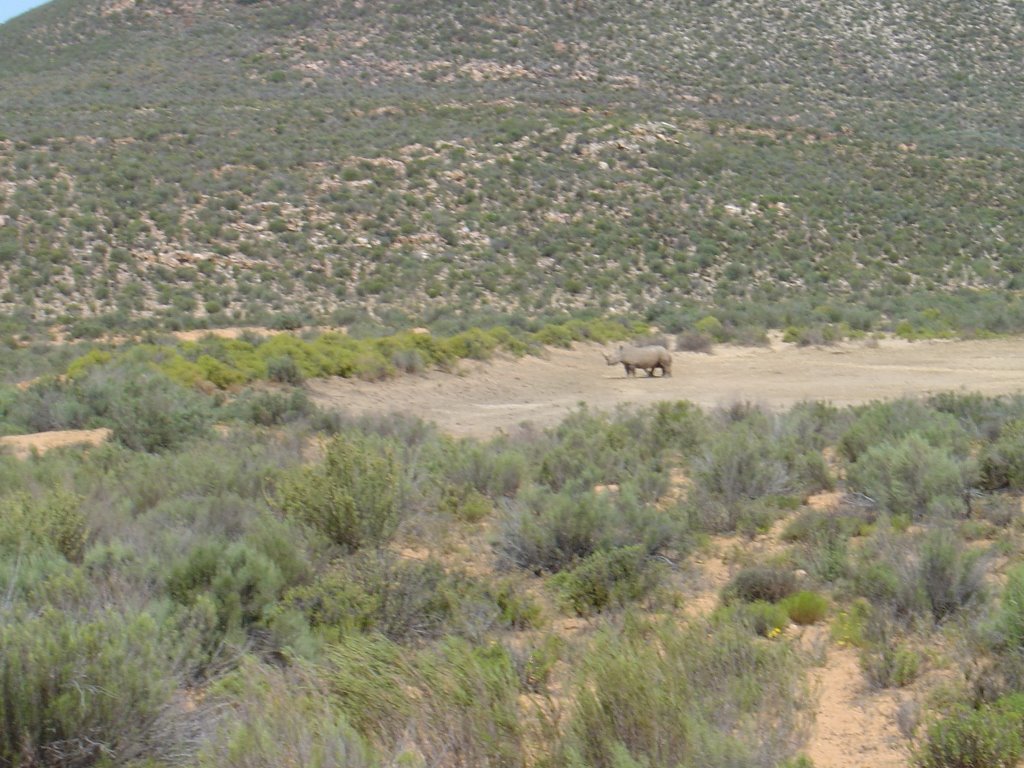
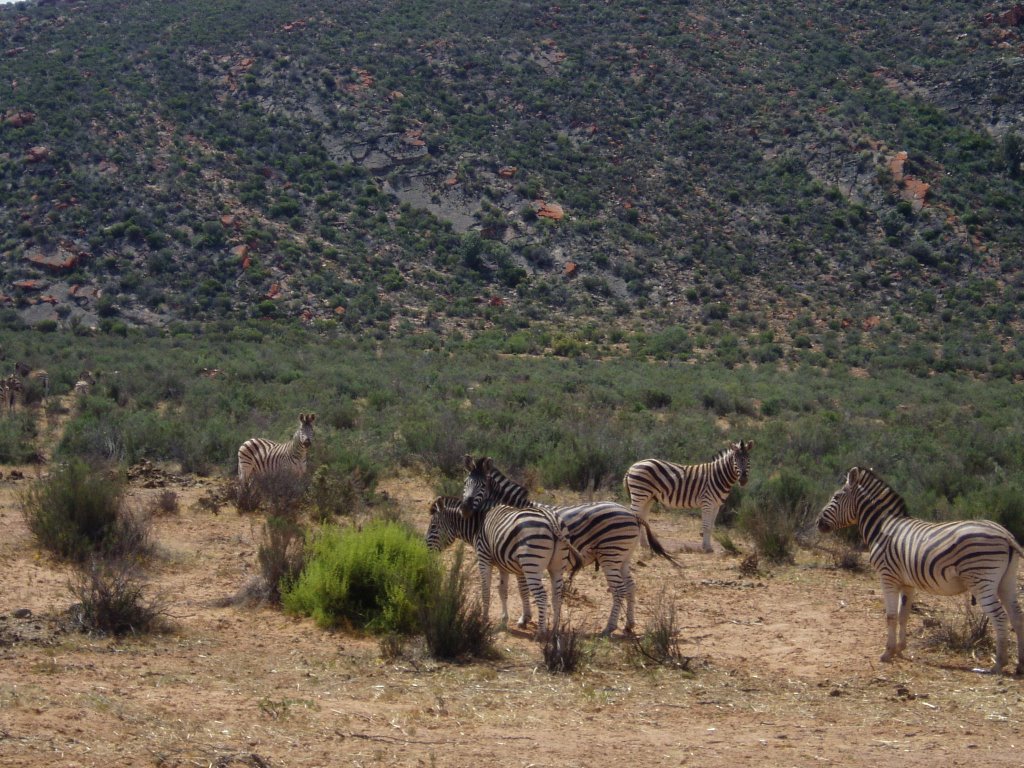
On horseback, as we made our way over a hill and looked out on the land before us, we saw a herd of Zebra grazing in the distance and 4 Rhino playing in a field of dust. We set out to get a bit closer to the Rhinos and we did. But, the male was staying a back from the 2 females and the baby, therefore, Andre could not take us as close as he would have liked to, as we were all unsure what the Male Rhino would do.

We started to make our way back towards the lodge and in our path were the Zebra. Luckily, being on a horse, we can get really close to the Zebra without the Zebra being too offended. As we headed towards them, they did start to scatter off, but we ended up riding right through them. The setting with the giant lake in the background, surrounded by mountains, the dusty bushes and the wildlife was gorgeous.

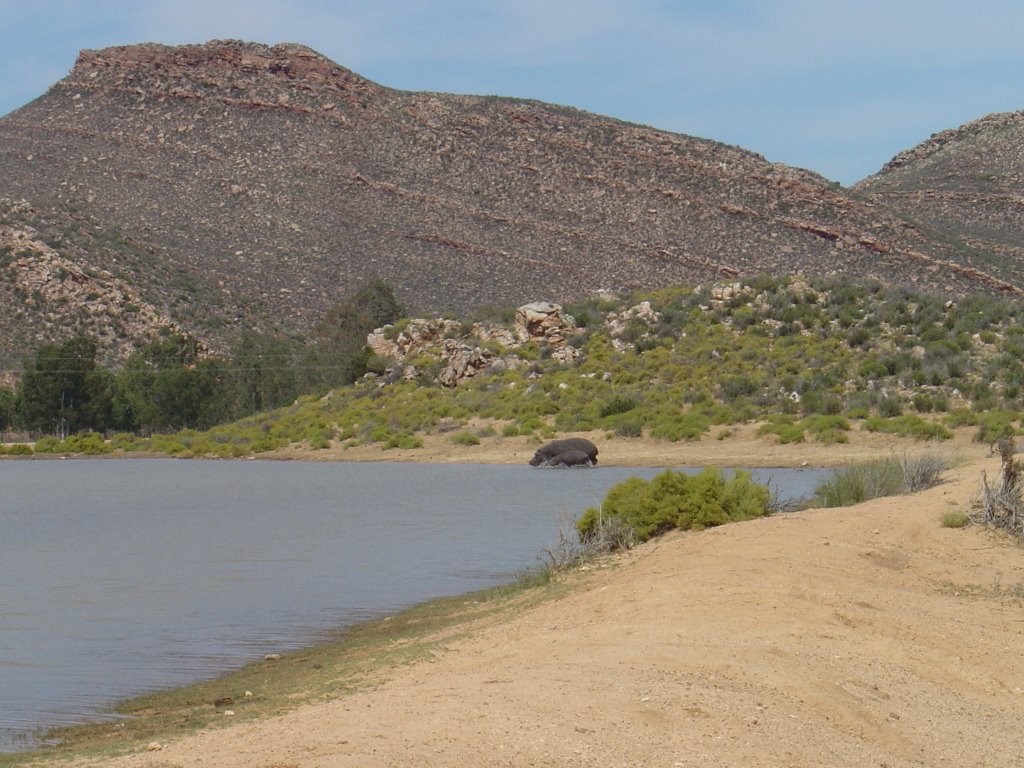
Upon our return to the lodge, the Mama Hippo and her baby and come out of the lake and perched themselves on the beach. That is, of course, until they saw us and they quickly got up and headed back into the water.


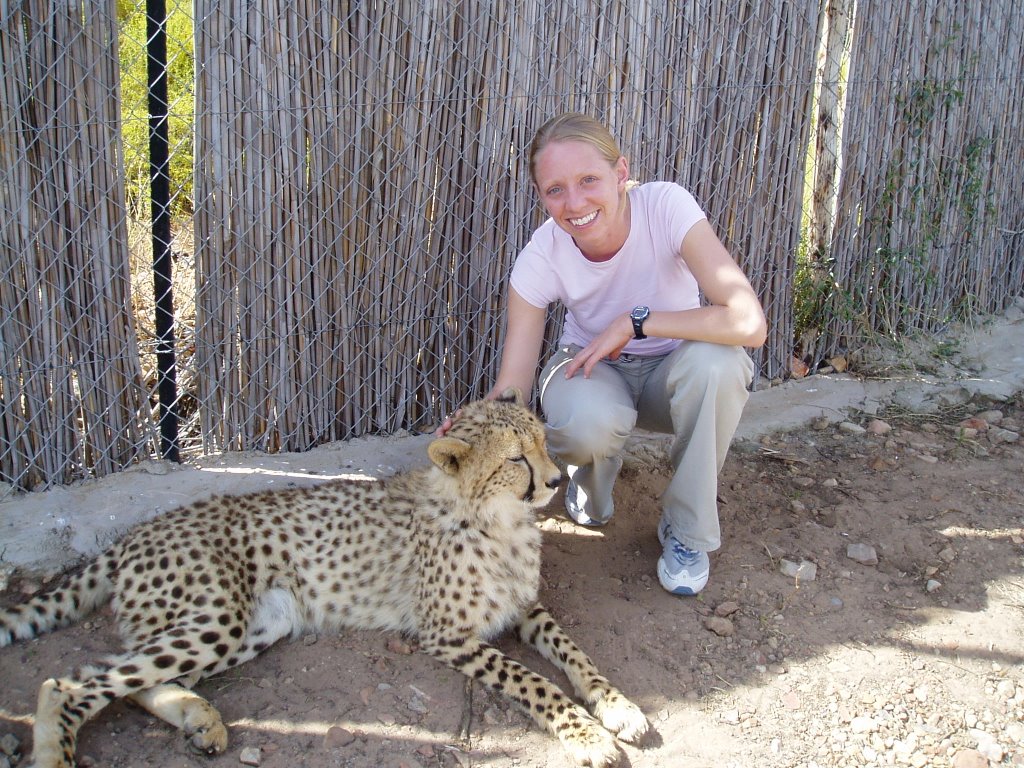
To end the day, I got to pet a Cheetah.

Labels:

The text and photos of all postings on this blog remain the copyright of Betsy Liebsch, unless otherwise stated. Under no circumstances should the photos or text be used without the express written permission of Betsy Liebsch. If you wish to use or publish photos or text from this article, please contact me.
Wednesday, November 08, 2006

Cape of Storms

Wednesday 8 November

Another gorgeous day in Cape Town. Today was the social portion of the ANADO meeting in which the hosts organized a tour of the South African Cape Pensiula.

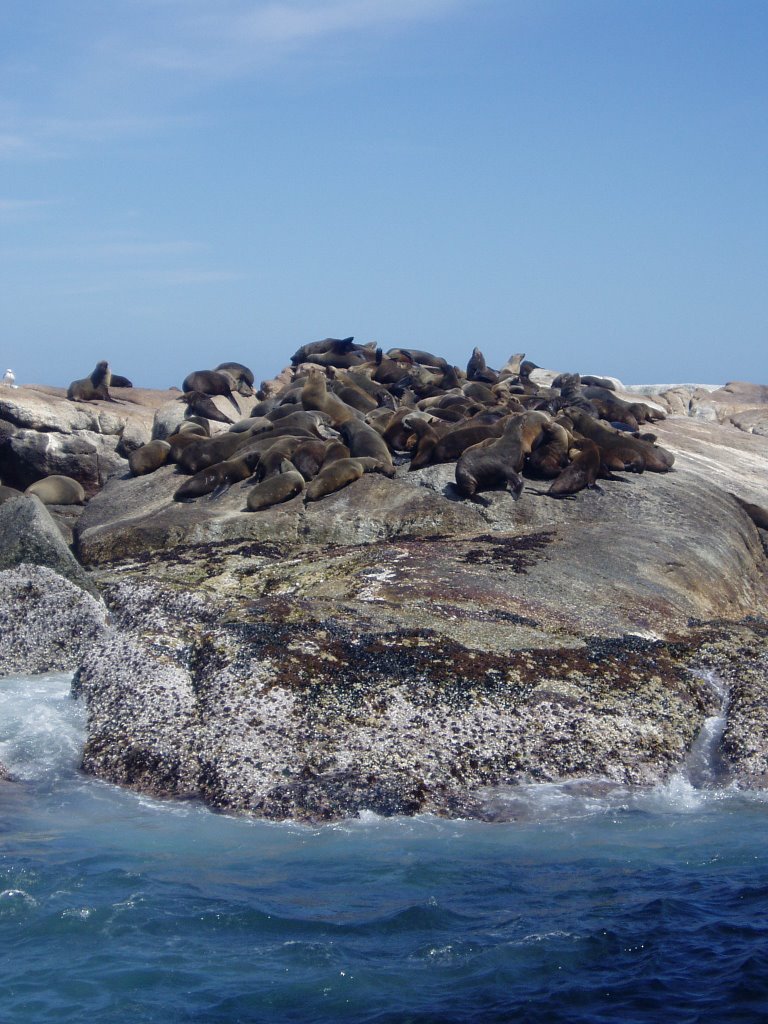
The first stop on the tour included a ferry ride in the Atlantic Ocean to Seal Island. Hundreds of seals were making the most of a sunny day in South Africa by lazily sleeping on the rocks, while others were showing off in the water for the boats that passed by.

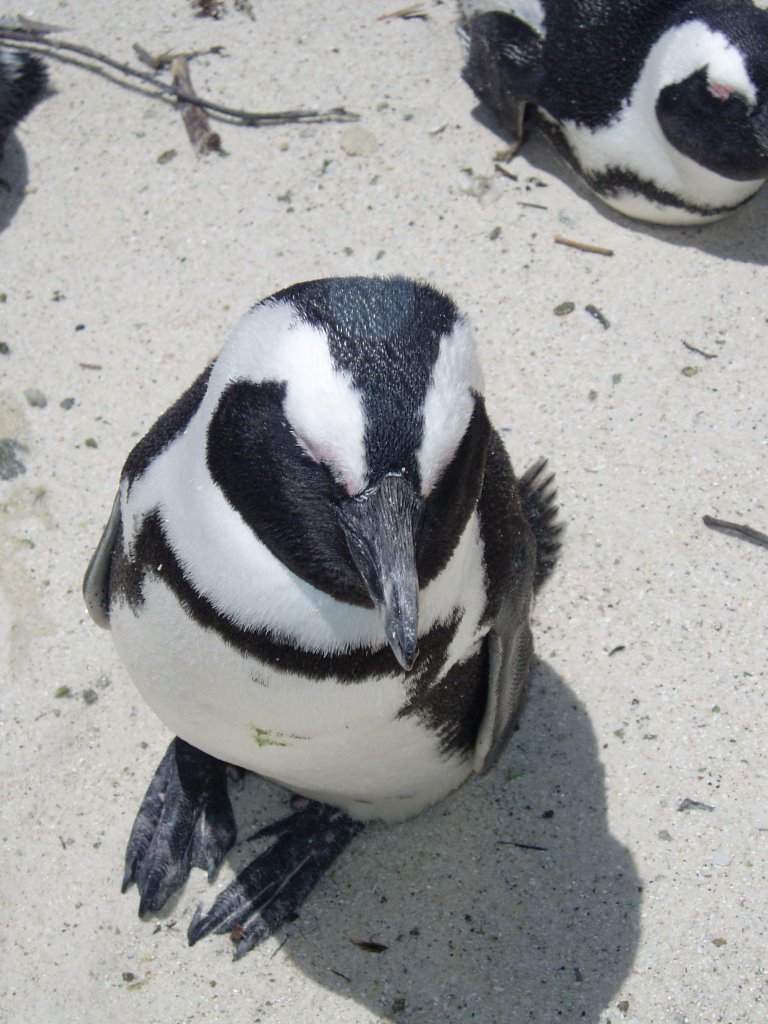
We then made our way to Simon’s Town and Boulder Beach. Boulder Beach is home thousands of African Penguins. From just two breeding pairs of penguins in the early 1980s, there are over 3,000 of them now living in False Bay. A big reason that the penguins have remained on Boulder Beach is because of the decreased boat travel in False Bay over the years which has increased the supply of anchovies and pilchards which are part of the penguin’s diet. The penguins in South Africa were formerly known as Jackass Penguins because of their donkey-like call.

A little trivia – the black and white colouring is a form of camouflage for the animal. The white side is for underwater predators looking upwards and the black for predators looking down into the water.

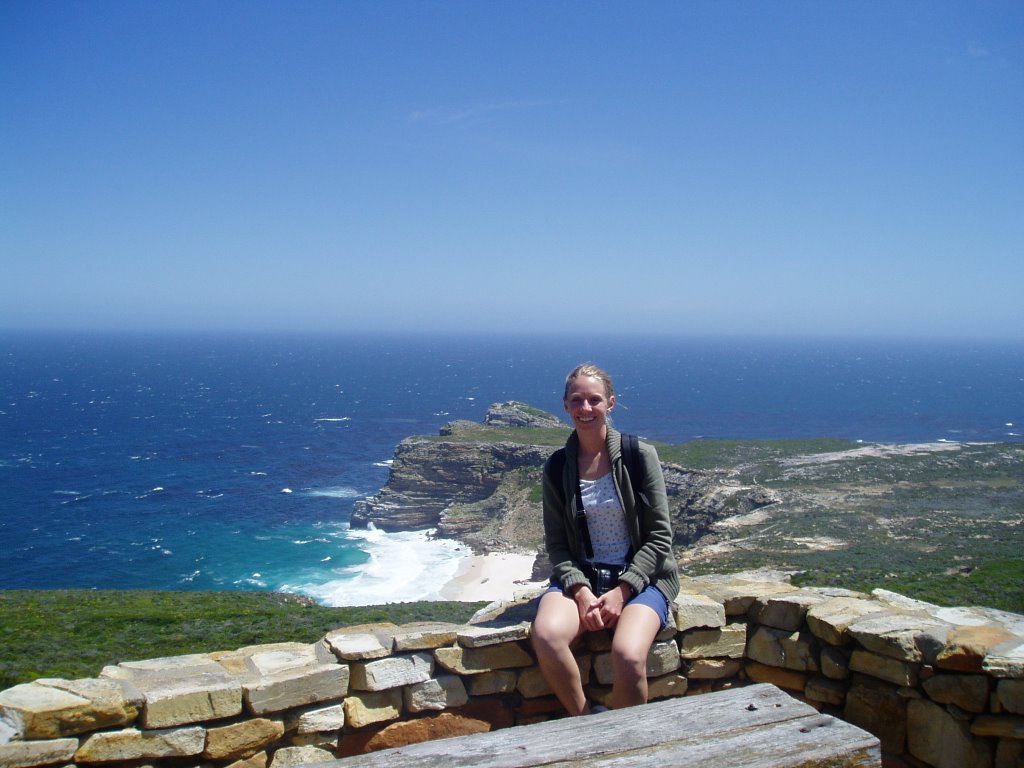
After the Penguins, the tour drove down the beautiful Indian Ocean Coast of False Bay to Cape Point and the Cape of Good Hope. Cape of Good Hope is the most south-westerly part of Africa. Most popularly perceived as the meeting point of the Atlantic and Indian Oceans, Cape Point is actually the spot where the cold current of the west coast of Africa meets the warm current of the east coast.

The Cape of Good Hope was first named the Cape of Storms. When the early settlers came to this area, the South Easterly wind (which is still very abundant today) was so fierce causing the water to be very dangerous that the sailors named this Cape the Cape of Storms. However, when Dutch-India Trade Company came down, they began to see the possibilities of the trade route to the east, therefore renaming the Cape the Cape of Good Hope. That is the Cape of Good Hope behind me.

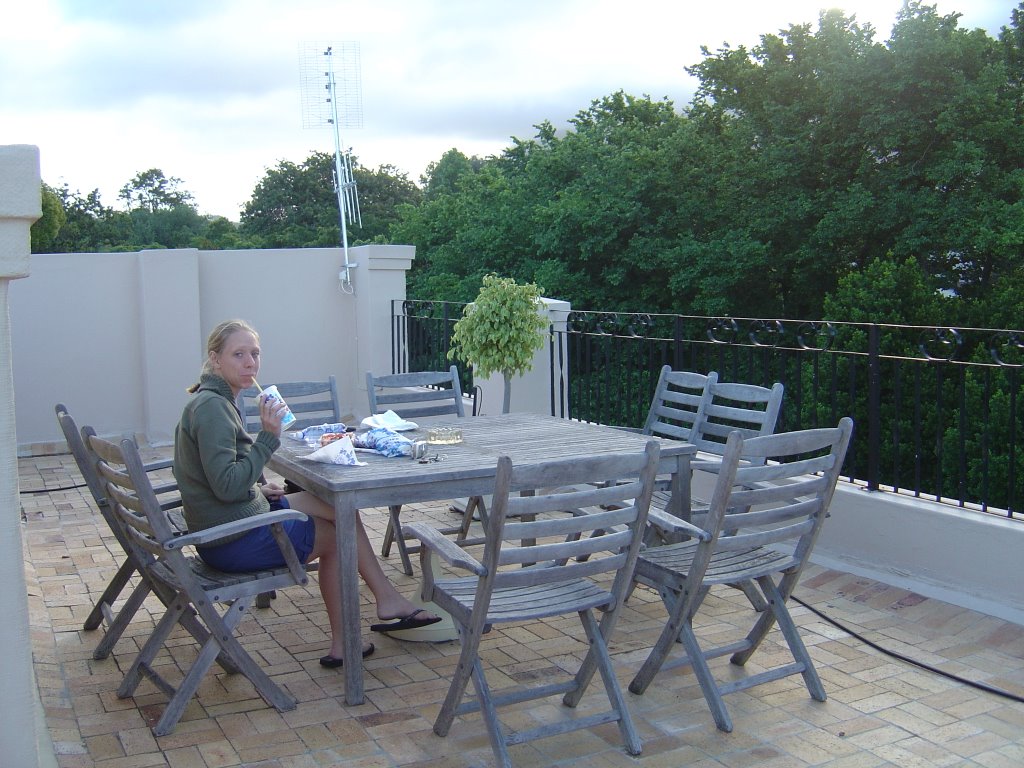
Kate Mittelstadt, a former co-worker from the US, was also at the meeting in Cape Town. She had also decided to extend her stay for a couple of days. That night, we had a little picnic on the roof-top garden of the hotel.

Labels:

The text and photos of all postings on this blog remain the copyright of Betsy Liebsch, unless otherwise stated. Under no circumstances should the photos or text be used without the express written permission of Betsy Liebsch. If you wish to use or publish photos or text from this article, please contact me.
Tuesday, November 07, 2006

Crocidile Rock

Monday & Tuesday, November 6 & 7
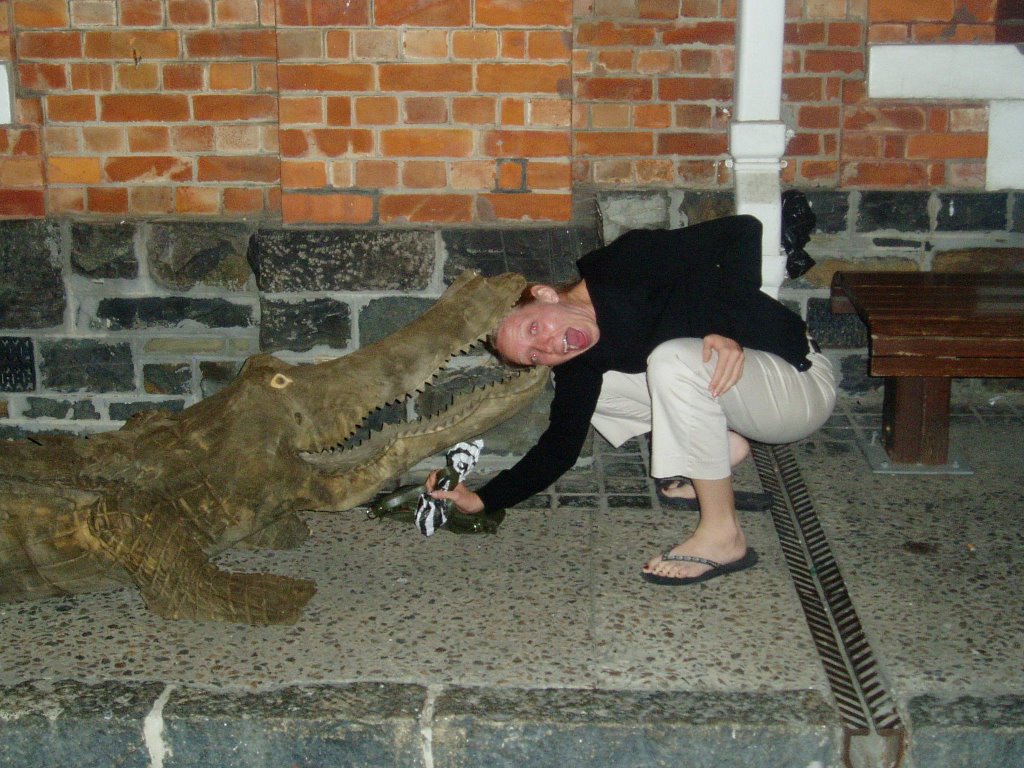
Meetings, Meetings and more Meetings. Although they were very productive, fruitful and beneficial to me as young professional in this field, it seems like the other half of the day was spent eating. Once at another African Café called Marco’s and another evening at the Cape Town Fish Market where I enjoyed a plate full of sea food while eating with colleagues from Japan at the same time learning about their culture. I was absolutely amazed at how much they work. Although they are quite busy at the moment, they said that they go to work around 9am and quite often don’t leave until 1 or 2 in the morning. That is crazy. This was the evening though that I got bit by a crocodile.

Labels:

The text and photos of all postings on this blog remain the copyright of Betsy Liebsch, unless otherwise stated. Under no circumstances should the photos or text be used without the express written permission of Betsy Liebsch. If you wish to use or publish photos or text from this article, please contact me.
Sunday, November 05, 2006

Moyo

Sunday, November 5
The next few days were filled with meetings and networking. This meeting has really allowed me to meet my fellow counterparts in other parts of the world. My old boss from the IPC, Andy, who now works in London, was also at the meeting. I told him as we were walking from the conference center back to the hotel that I was really glad that he couldn’t go to Barbados last year and that I got to go.

Prior to the first afternoon session, I went with a colleague from Poland participate in a City Bus Sightseeing tour. It was about 2 hours and we got to sit on the upperdeck of a topless bus. It was really fun and was a great way to see the city and learn a bit of history as well. Sights along the tour included, the Waterfront, the City Markets, the Castle of Good Hope, District 6, the Cape Town Museum, Table Mountain, Camps Bay and Sea Point.

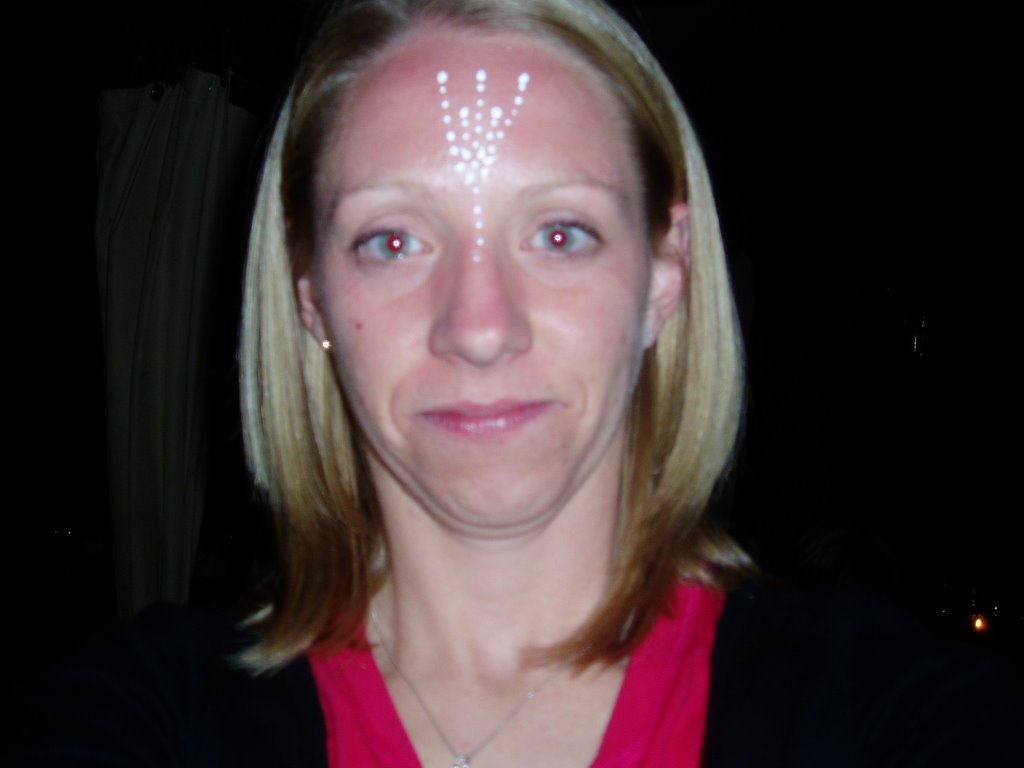
After the meeting, a rep from the World Anti-Doping Agency, Rod, took myself and a colleague from Canada and New Zealand to this African Café called Moyo. The world Moyo means “Soul” in Swahili. The café was settled in the Drakenstein Mountains in the region of StellenBosch, a major wine region in South Africa. Not far from Cape Town are the biggest winelands of the country. This African Café was beautiful. I am sure my mouth dropped to the floor when I walked into the giant tent with dim lights and laterns and blankets over the chairs for when it got cold. We then walked into a different area of the estate and in the trees were lanterns, and waterfalls and fountains lined the walkways. Near every wine bar were bed-like couches with little coffee tables nearby. The ambiance established by the café was brilliant. The food at the café was excellent – meats (buffalo, ostrich, pork, ribs, etc.), fresh fruits and vegetables, potatoes. It was really good. The wine made in South Africa is wonderful as well. It is too bad that I was flying through London and my baggage was limited and that I couldn’t bring some back with me. Through the course of the evening, traditional song and dance was performed and they came around and painted your face. I have a flower on mine and yes, I took this picture of myself.


Labels:

The text and photos of all postings on this blog remain the copyright of Betsy Liebsch, unless otherwise stated. Under no circumstances should the photos or text be used without the express written permission of Betsy Liebsch. If you wish to use or publish photos or text from this article, please contact me.
Saturday, November 04, 2006

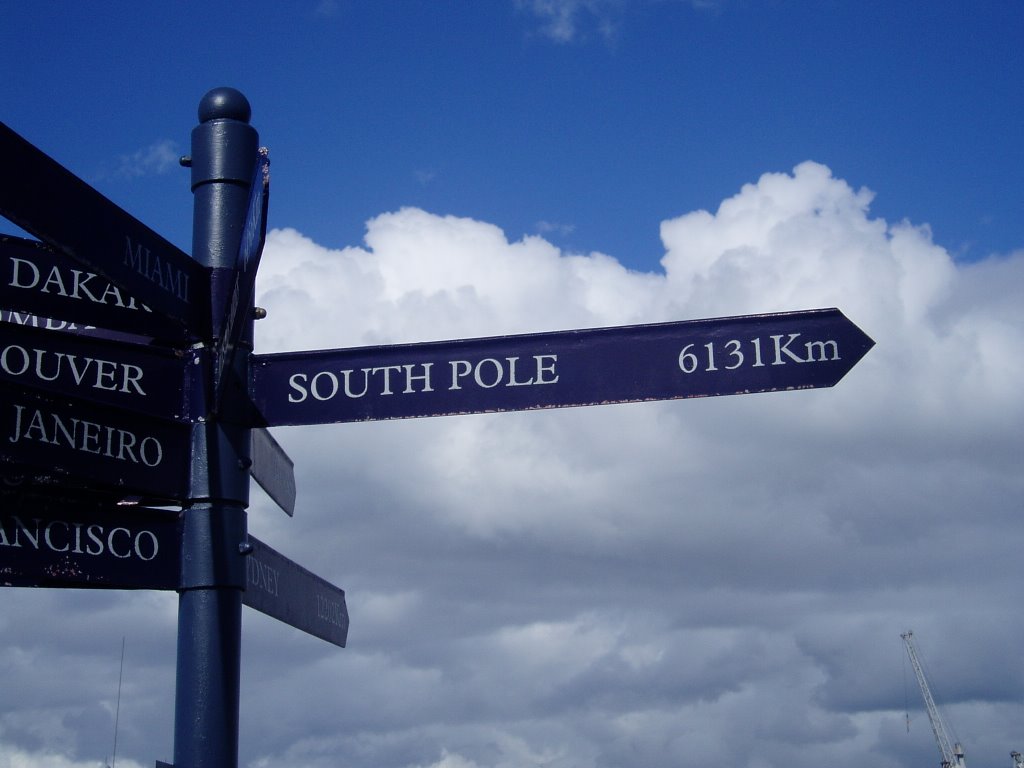
3,809 miles to the South Pole

Saturday, November 4

Only 6,131 kilometers to the South Pole. Who would have thought that I would have ever travelled this far south? Cape Town, South Africa. The meeting of the Association of National Anti-Doping Organizations, in which the IPC is a member of, had its annual meeting and General Assembly in Cape Town. Last year Barbados….this year South Africa….what are the chances?

It was a long flight from Europe to South Africa, luckily I was able to sleep. It wasn’t until I got in line for Passport Control that I realized how glad I was that I slept. I had to wait in line for 1 hour and 45 minutes just to have someone look at my passport.

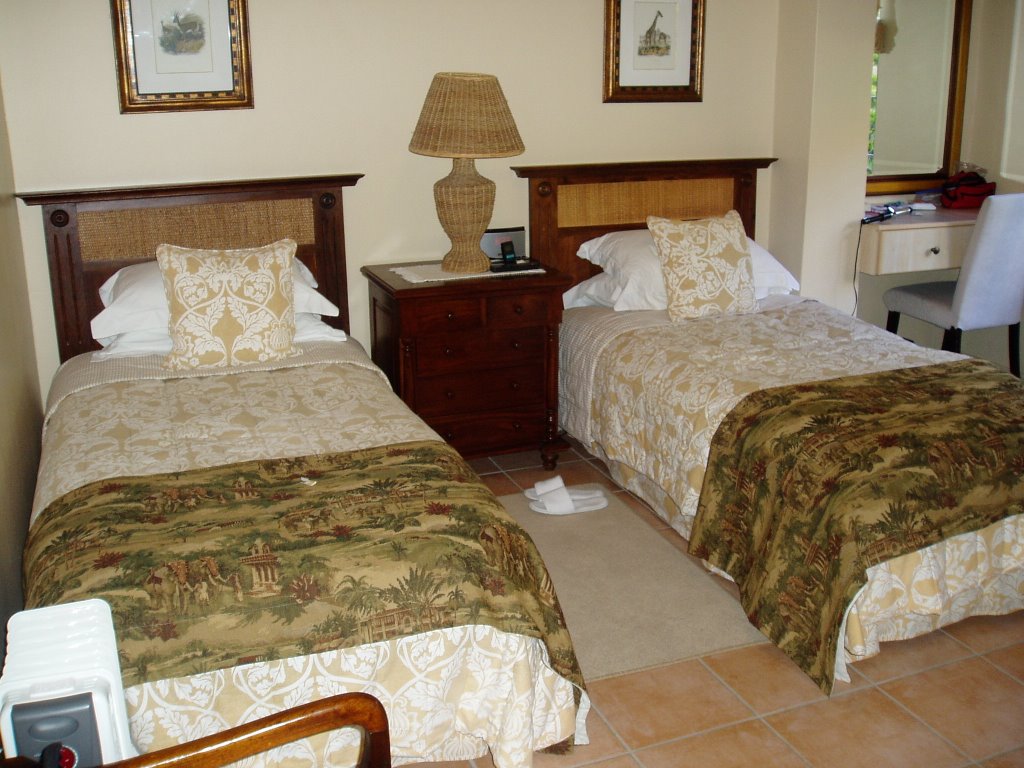
For the duration of my visit to Cape Town, I was staying at a bed and breakfast called the RiverSong Guest House. It was wonderful. I think someone called it a little oasis in a big oasis and it really was. The owners, Jim and Inri McManus, were wonderful and so inviting. The guest and hotel services were top-notch. I was staying in the Ethnic Room. There was also the Leopard room, Floral Room, Honey Moon Suite, and the Colonial room. Each room had it’s own character as you can tell.

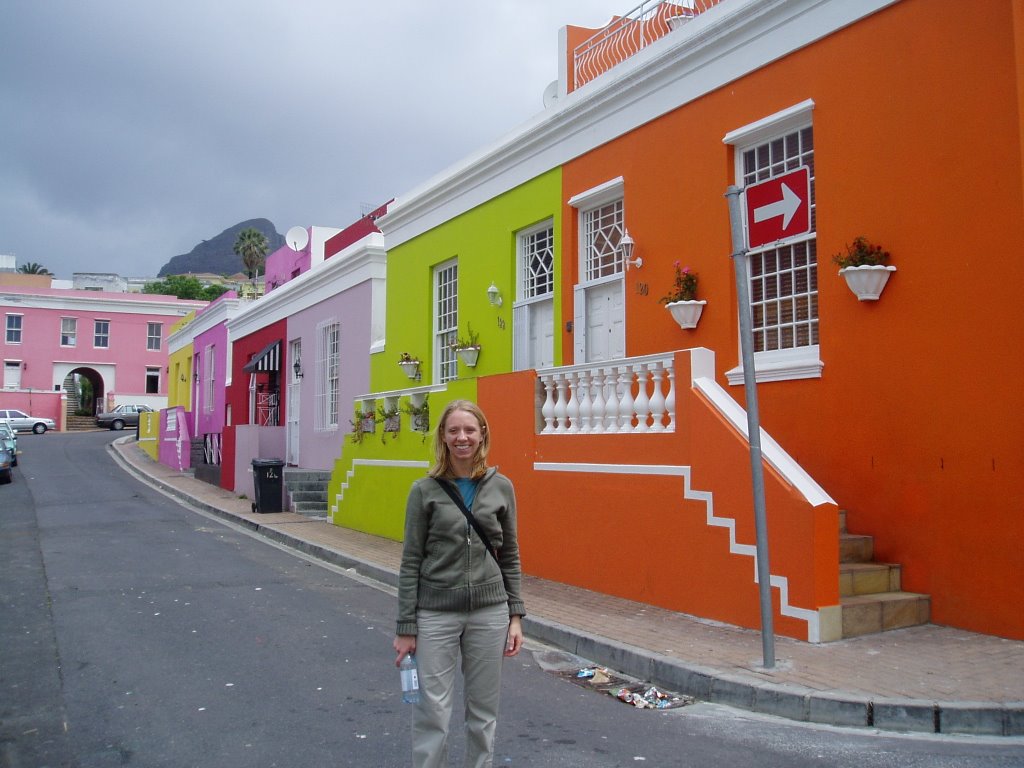
Another girl, Anne, who was also in Cape Town for the meeting, was staying at the RiverSong Guest House as well. We met each other at breakfast and ended up spending the rest of the day sightseeing in Cape Town. We first headed to the GreenStreet Market and the city of Cape Town. One area of the city is called Bo-Kaap. This area really showed the true flavour of Cape Town. Through some of the streets, you could walk and see the residents sitting on their stoops watching the people go by. The area is best known for its colourful houses that line the streets. Most of today’s residents are the descendants of skilled craftsmen, silversmiths, shoemakers, tailors, fishermen and cooks.

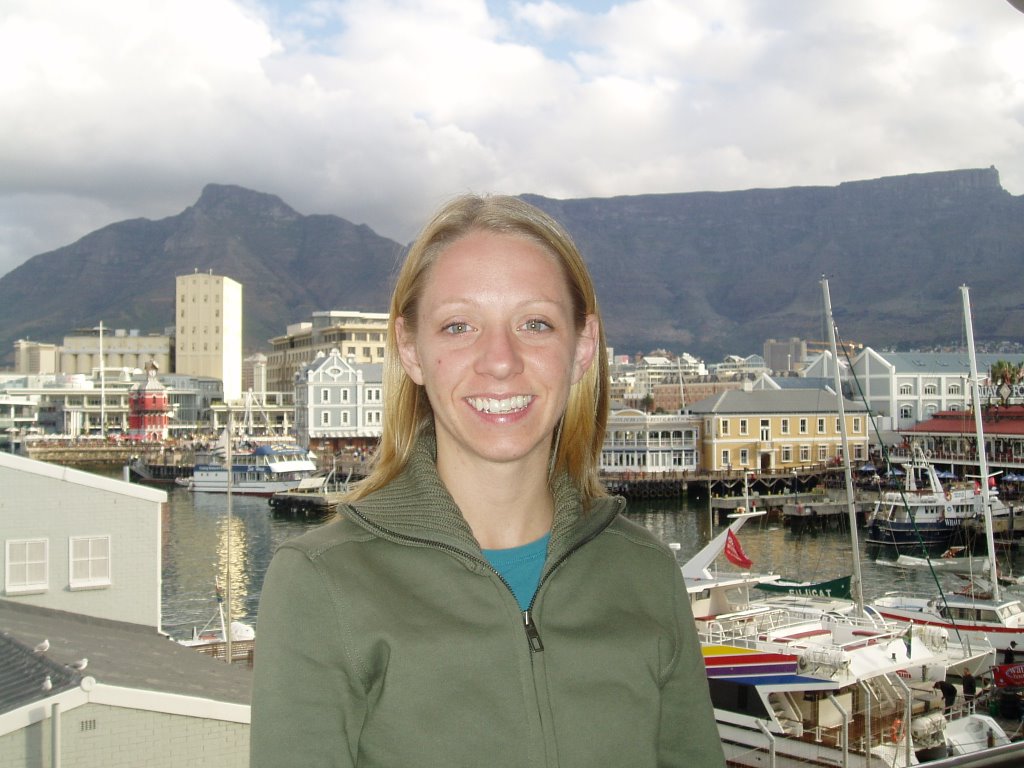
After our wander through the streets of Bo-Kaap, Anne and I walked down to the Victoria & Alfred Waterfront where locals and tourists alike will spend hours and hours walking around, eating, drinking and shopping. Lots of Shopping. We ate a late lunch at Harry’s Pancakes and then walked out to the end of the Water Breaker for a great view of the Cape Bay and the harbour.

At the end of our evening, we ate dinner at an Italian restaurant called Mama Rosas and then called it a day. So far, my impression of Cape Town has been good…and I can’t wait to explore more of the area.


Labels:

The text and photos of all postings on this blog remain the copyright of Betsy Liebsch, unless otherwise stated. Under no circumstances should the photos or text be used without the express written permission of Betsy Liebsch. If you wish to use or publish photos or text from this article, please contact me.